
Choosing a Chassis for a Custom Motorhome
What is the Right Chassis For You?
We have the opportunity to talk with many people about how they want to travel. As we begin turning those ideas into a custom motorhome, one of the first decisions is the chassis platform on which it will be built.
The chassis sets the basic parameters for the build. Size, all-wheel drive, weight capacity, fuel type, service access, and other factors all shape what is possible.
This article outlines considerations for chassis selection. In nearly 15 years of custom work, Advanced RV has built on Mercedes-Benz Sprinters of several sizes, Ford Transits, box platforms, custom trailers, and more.

How ARV’s Energy System Works
Advanced RV has built nearly 200 custom motorhomes on several types of chassis over the past 15 years.
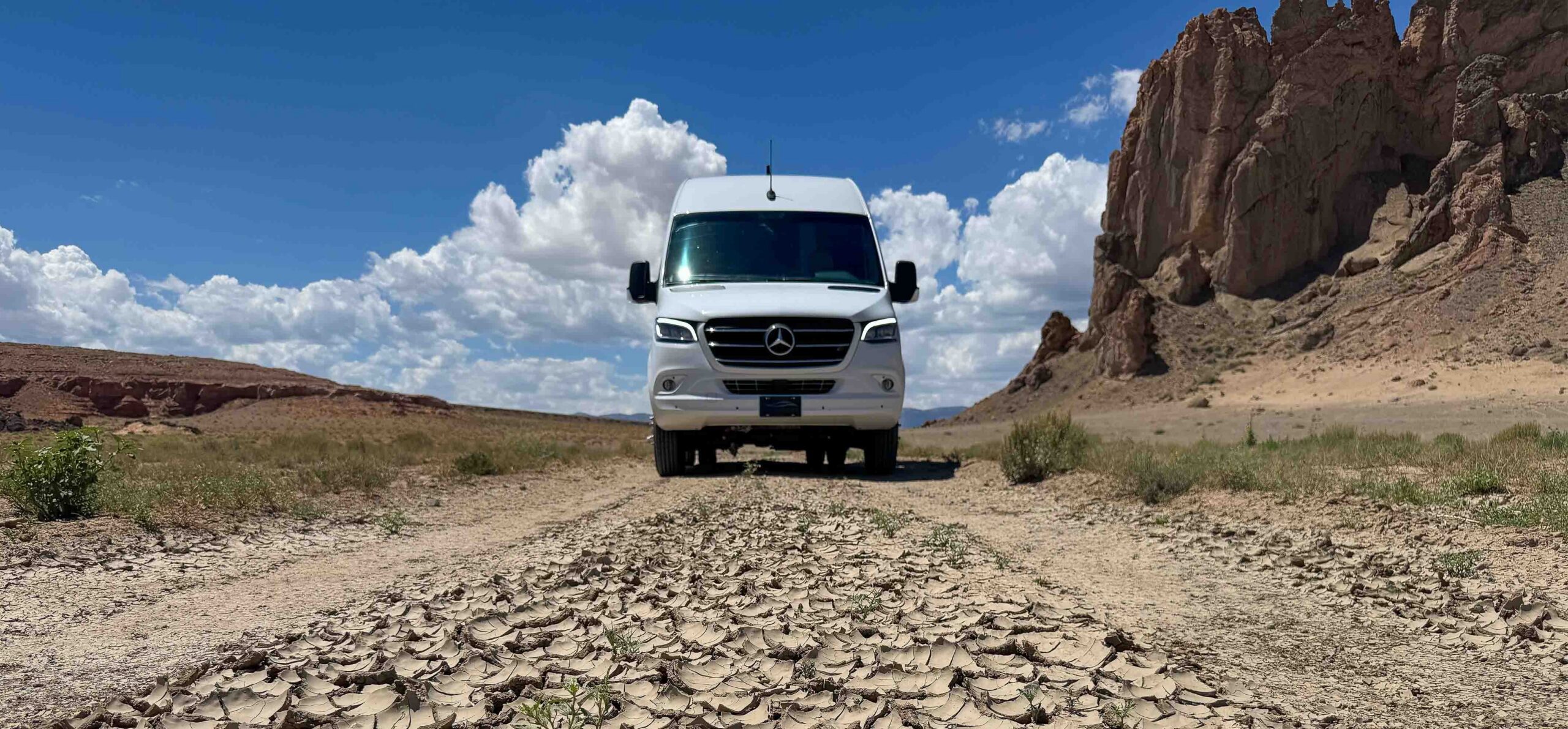
Most clients choose the Mercedes-Benz Sprinter for their Advanced RV Class B motorhomes. The Sprinter is known for its long life diesel powertrain, high weight ratings, driving safety and comfort, and availability in several lengths and configurations.
We have also built on the Ford Transit. Clients are drawn to its gasoline engine, interior dimensions, driving experience, and broad Ford service network.
For more interior space and extreme four-season travel, clients choose the Advanced RV B Box, which is a cab chassis configuration.
Each chassis creates different opportunities and constraints. Before comparing specifications, however, we encourage clients to picture a normal day of travel. What does that day look like for you?
Imagine a Normal Day of Travel
Imagine waking up in the motorhome after a night on the road.
Where are you? Are you in a campground, parked in a city, or deep in a national forest?
Have you been traveling for months, or are you taking a weekend trip?
Are you traveling alone, or are a partner and pets waking up with you?
What gear have you brought? How will you prepare breakfast? How much room do you need to move through the vehicle comfortably?
The chassis decision starts with a clear picture of how the motorhome will actually be used.
Size, Space, and Maneuverability
One of the first chassis decisions is how to balance interior space with exterior size.
A shorter motorhome is easier to maneuver in tight parking lots, narrow streets, and some campsites. It may also have a smaller turning radius and less rear overhang. For travelers who want a compact vehicle and a simple interior, a shorter chassis might be in order.
A longer or wider motorhome creates more room for beds, seating, bathrooms, storage, water tanks, batteries, and large equipment. It can also give two people more room to live and move inside the motorhome
Common Platform Sizes and Dimensions
The Mercedes-Benz Sprinter van is available in three common body sizes for custom motorhome use:
- 144-inch wheelbase (19’9” in total length)
- 170-inch wheelbase (22’9” in total length)
- 170-inch wheelbase with an extended body (24’2″ in total length)
The Ford Transit is also available in several wheelbase, body-length, and roof-height combinations. These create options ranging from a compact van to a longer, high-roof platform.
A B Box begins with a Mercedes-Benz Sprinter or Ford Transit cutaway chassis. We then design and build the box behind the cab. Its dimensions can be adjusted for the project, although we often keep its overall length similar to common Sprinter van lengths.
These are the platforms we work with most often, but they are not the only possibilities. A different chassis or body style can be considered when it better supports the client’s objectives.
Raw Platform Dimensions
|
Platform |
Overall exterior length |
Raw interior length |
Raw interior width |
Raw interior height |
|
Sprinter 144” Van |
19’6” |
11’1” |
5’10” |
6’7” |
|
Sprinter 170” Van |
22’10” |
14’6” |
5’10” |
6’7” |
|
Sprinter 170” EXT Van |
24’2” |
15’9” |
5’10” |
6’7” |
|
Transit 148” Van |
19’8” |
12’ |
5’10” |
6’9” |
|
Transit 148” EL Van |
22’ |
14’4” |
5’10” |
6’9” |
|
B Box 144” |
21’1” |
11’9” |
6’6.5” |
6’8” |
|
B Box 170” |
23’2” |
13’11” |
6’6.5” |
6’8” |
|
B Box 170” EXT |
24’8” |
15’4” |
6’6.5” |
6’8” |
These are raw dimensions measured before the motorhome is built. Insulation, flooring, wall and ceiling panels, cabinetry, utilities, and other parts of the conversion reduce the finished dimensions. For example a finished Sprinter van, with flooring and ceiling panels, reduces the total interior height to around 6’3”. Van width also changes at different points in the body.
There are Ford Transit Cab chassis with 156″ and 178″ wheelbases.
What Size Chassis Should You Choose?
Exterior length affects parking, turning, ferry and campsite requirements, and rear axle overhang. Width and height affect narrow roads, branches, garages, and other clearances.
Many owners find that a longer Class B is easier to drive than they expected. Others value every advantage of a shorter footprint. The decision should reflect the places where the vehicle will actually travel.
A shorter van may require the bed, seating, table, and storage to perform more than one function. The owner may need to convert a sofa into a bed or use one area for several activities during the day. Clients choosing the smaller platform sacrifice interior space and comfort, for a smaller footprint.
Additional length can allow for a permanent bed, separate seating, a larger bathroom, more storage, or space for bicycles and other equipment. It can also provide more separation when two people want to read, work, cook, or sleep at different times.
Width and body shape matter as well. Sprinter and Transit walls curve and taper as they rise. Wheel wells, doors, windows, and structural members also interrupt the available space.
An Advanced RV B Box has straighter walls and a more rectangular interior. This creates substantially more usable room without creating a larger exterior footprint. The added interior width can open possibilities for wider aisles, larger beds, more storage, and floor plans that would be difficult to fit inside a van body.
Weight Rating and Payload
Size determines what can physically fit inside a motorhome. Weight determines how much the chassis can legally carry.
Every chassis has a Gross Vehicle Weight Rating, or GVWR. This is the maximum allowable weight of the completed vehicle when it is fully loaded for travel. The conversion itself counts toward that limit, along with passengers, water, food, clothing, bicycles, tools, and everything else brought aboard.
Most Advanced RV Sprinter van builds use the 3500XD, which has a GVWR of 11,030 pounds. A Sprinter 4500’s GVWR is 12,125 lbs, but is only available in 2WD. For some lighter builds where a client prefers a single-rear-wheel chassis, the Sprinter 2500 provides a 9,050-pound GVWR. Current Ford Transit configurations reach up to 11,000 pounds. Exact ratings vary by chassis configuration and model year.
The available weight capacity includes fluids. Forty gallons of fresh water weighs about 334 pounds. A B Box commonly carries 50 gallons, or about 417 pounds of fresh water. Cabinetry, batteries, appliances, plumbing, passengers, food, luggage, bikes, and other equipment all part of GVWR.
Drivetrain affects payload as well. On comparable current Sprinter 3500XD configurations, all-wheel drive adds roughly 300 pounds compared to rear-wheel drive, reducing the capacity available for the conversion and everything carried inside.
Advanced RV builds RVIA-certified motorhomes and is a Mercedes-Benz eXpertUpfitter. The eXpertUpfitter program requires compliance with applicable Federal Motor Vehicle Safety Standards, Mercedes-Benz Body and Equipment Guidelines, and required upfitter testing. RV Industry Association manufacturers also build to nationally recognized RV construction standards and are subject to compliance inspections.
GVWR is monitored throughout the ARV design and build process. A build can physically accommodate more passengers, fluids, and equipment than the chassis is rated to carry if weight is not managed carefully. Staying within the chassis specifications supports safe operation, normal chassis service through the dealer network, and proper use of the vehicle as it was engineered. Operating above the rated weight can also create warranty, insurance, and potential liability concerns, particularly if the vehicle is involved in an accident.
Where that weight is placed also affects the finished motorhome. Advanced RV mounts major heavy components, including the battery system and water tanks, below the chassis frame rails. Keeping this weight low helps lower the vehicle’s center of gravity and contributes to safety, stability and handling.
As the floor plan and systems develop, we maintain a weight-monitoring spreadsheet to estimate the completed vehicle. That planning leaves appropriate capacity for the people, water, equipment, and belongings the motorhome will carry.
Rear-Wheel Drive or All-Wheel Drive?
Rear-wheel drive sends engine power to the rear axle. All-wheel drive can also send power to the front axle when additional traction is needed. On the current Mercedes-Benz Sprinter, the AWD system normally operates through the rear wheels and can automatically send up to half of the available torque to the front axle.
There are a few other differences. A Sprinter with AWD weighs about 300 pounds more than rear-wheel drive, reducing the available payload by roughly the same amount. The AWD Sprinter also rides higher, providing about 3.5″ of additional ground clearance.
Fuel economy also favors rear-wheel drive. In our experience with the current four-cylinder diesel Sprinter, we often see a difference of up to a couple miles per gallon, with examples around 20 mpg in rear-wheel drive and 18 mpg in all-wheel drive. Actual mileage varies with the motorhome, speed, terrain, weather, and driving.
For most clients, the decision comes back to where and when they expect to travel. AWD is useful on snow-covered and slippery paved roads, wet grass, gravel, and forest roads where the surface remains reasonably firm. We have traveled extensively in rear-wheel-drive Sprinters, including in winter weather and on unpaved roads, and they are often more capable than first-time owners expect. The onboard traction control helps them in these conditions.
The extra ground clearance of the AWD Sprinter can be as valuable as the added traction. Rough roads, uneven campsites, ruts, rocks, and steep transitions all place parts of the motorhome closer to the ground. Some clients choose AWD largely for that additional clearance. The Ford Transit takes a different approach: Ford’s Intelligent AWD system is integrated without raising the load floor or seat height, so selecting AWD does not provide the same factory height increase.
A completed Class B motorhome is a heavy vehicle, often approaching 10,000 pounds when loaded. That weight can help it feel planted on firm surfaces, but soft terrain requires more caution. Deep sand, mud, large rocks, and deep ruts can stop an AWD motorhome just as easily as a rear-wheel-drive one. In one of our own demonstrations on our YouTube channel, we drove a large Sprinter through woods and fields in rear-wheel drive without difficulty because the ground was firm. The same vehicle required four-wheel drive when traveling on a sandy beach.
AWD can also be useful for winter travel through areas where traction or chain requirements are common, although the specific rules vary by state, road, and conditions.
For clients who spend most of their time on paved roads and in moderate weather, rear-wheel drive offers lower weight and better fuel economy. Frequent winter travel, gravel and forest roads, or a need for additional Sprinter ground clearance can make AWD worthwhile. Some owners also simply prefer the taller stance and more rugged appearance of an AWD Sprinter.
Mercedes-Benz Sprinter or Ford Transit?
Both the Mercedes-Benz Sprinter and Ford Transit can support a highly capable custom motorhome. The better choice depends on the powertrain, driving experience, interior dimensions, weight capacity, ground clearance, and service access that best fit the owner.
Gasoline or Diesel
Current Sprinters use a four-cylinder diesel engine. For clients who travel long distances, diesel can provide strong fuel economy and useful driving range—the distance the vehicle can travel between fuel stops.
The Transit uses gasoline engines, including Ford’s naturally aspirated and EcoBoost V6 options. Some clients prefer the familiarity of gasoline, its broad availability, and avoiding some of the emissions-system considerations of a modern diesel. The Transit can also feel quicker under acceleration.
For some clients this preference alone is enough to steer the chassis decision.
Driving Experience
The Sprinter has a tall, upright driving position with a large windshield and strong forward visibility. Many clients find even the longer Sprinters easier to drive than expected.
The Transit tends to feel somewhat more like a conventional passenger vehicle in its steering, seating position, and power delivery.
We encourage clients to drive both when possible. Seating position, visibility, pedal placement, and general comfort are difficult to evaluate from specifications.
Interior Space and the B Box Option
The Transit provides slightly more raw standing height in comparable high-roof configurations. Our measurements show approximately 6’9″ in the Transit and 6’7″ in the Sprinter before insulation, flooring, ceiling panels, and utilities reduce the finished dimensions.
Both van bodies curve and taper, and doors, wheel wells, windows, and structural members affect usable space.
For clients who want substantially more interior room, Advanced RV can also build a B Box on either a Sprinter or Transit cutaway chassis. Instead of converting the factory van body, we mount a highly insulated box behind the cab. Its straighter walls and added width create significantly more usable interior space without adding much exterior length.
Comparing Weight Capacity
The platforms are similar at the heavy-duty end. The Sprinter 3500XD has an 11,030-pound GVWR. Ford’s current Transit T-350HD can be configured up to 11,000 pounds GVWR, with maximum payload depending on drivetrain and body configuration. Ford lists up to 5,103 pounds of payload on a current T-350HD high-roof extended cargo van.
The rating alone does not determine which chassis is best. Chassis weight, drivetrain, body length, passengers, water, batteries, cabinetry, and equipment all consume available payload. We evaluate the specific chassis alongside the proposed floor plan.
Comparing AWD, Ride Height, and Ground Clearance
Both platforms offer all-wheel drive, but there is an important difference in how they are packaged.
A current Sprinter AWD sits noticeably higher than its rear-wheel-drive counterpart. Mercedes publishes an unloaded cargo-floor height around 31 inches on AWD configurations versus roughly 27–28 inches on comparable rear-wheel-drive models. Ford’s Intelligent AWD is integrated without raising the Transit’s load floor or seat height; its high-roof cargo floor remains around 29 inches.
That does not mean every component underneath an AWD Sprinter gains the same amount of clearance. Published specifications put the lowest mechanical ground clearance of current Sprinters at roughly 8 inches, while the Transit is around 6 inches. The lowest mechanical point is often the more useful measurement when considering rocks, ruts, or uneven roads.
The completed motorhome can change the picture again. Advanced RV may install running boards, steps, hydraulic leveling equipment, tanks, body components, or other equipment below parts of the chassis. We consider those finished clearances when designing a vehicle for the places an owner expects to travel.
Service Access and Maintenance
Advanced RV has extensive experience building and supporting Mercedes-Benz Sprinters, which remain our most common van platform. Mercedes has a commercial-vehicle dealer network across North America, although it is smaller than Ford’s.
Ford’s service network is broader, which can be appealing to travelers spending long periods away from home in unfamiliar places.
Service frequency is another part of the comparison. Mercedes currently specifies a 20,000-mile service interval for the Sprinter. The Transit uses Ford’s Intelligent Oil-Life Monitor, with oil-change intervals generally around 7,500–10,000 miles under normal use and shorter intervals under heavier operating conditions. A motorhome’s weight, mountain travel, extended idling, and other use can shorten that interval.
In practice, the Transit may offer more places to obtain service, while the Sprinter typically requires scheduled service less often. Both are worth considering for travelers who expect to spend long periods away from home.
Sprinter and Transit at a Glance
|
Consideration |
Mercedes-Benz Sprinter |
Ford Transit |
|
Engine |
Diesel |
Gasoline |
|
Fuel Benefit |
Long-distance efficiency and range |
Simple and widely available |
|
AWD |
Available; raises body/load floor |
Available without raising load floor |
|
Heavy-duty GVWR |
3500XD: 11,030 lbs. |
T-350HD: up to 11,000 lbs. |
|
Minimum chassis ground clearance |
About 8 in. |
About 6 in. |
|
Raw high-roof interior height |
About 6’7″ |
About 6’9″ |
|
Driving character |
Upright position, strong visibility |
More conventional automotive feel |
|
Service |
Mercedes-Benz commercial network |
Broad Ford dealer network |
|
B Box |
Available on Sprinter cutaway |
Available on Transit cutaway |
The decision rarely comes down to one specification. One client may prefer the Transit for its gasoline engine and service network, while another may choose the Sprinter for diesel efficiency, ride height, or familiarity with the platform. The right chassis is the one whose tradeoffs best support the finished motorhome and the places it will travel.

We’re Here to Help You Choose
Specifications can narrow the choices, but they cannot tell you how a chassis will feel after several hours behind the wheel.
If possible, drive the platforms you are considering. Sit in the cabs, walk through short and long vehicles, and picture the motorhome in everyday use. Think about loading bikes, pets, food, and luggage, or spending a rainy afternoon inside when everyone and everything has to share the same space.
The right chassis begins with the way you want to travel.
Your objectives determine the space, payload, drivetrain, range, and other capabilities the motorhome needs. The chassis determines the boundaries within which those ideas can be built safely and effectively.
Our role at Advanced RV is to bring those two sides together by understanding how you want to travel, evaluating the technical requirements, and helping select a platform that can support the complete motorhome.
If you’re considering a custom motorhome, we can help you work through the tradeoffs and choose a platform that fits the way you want to travel.